English | Tiếng Việt
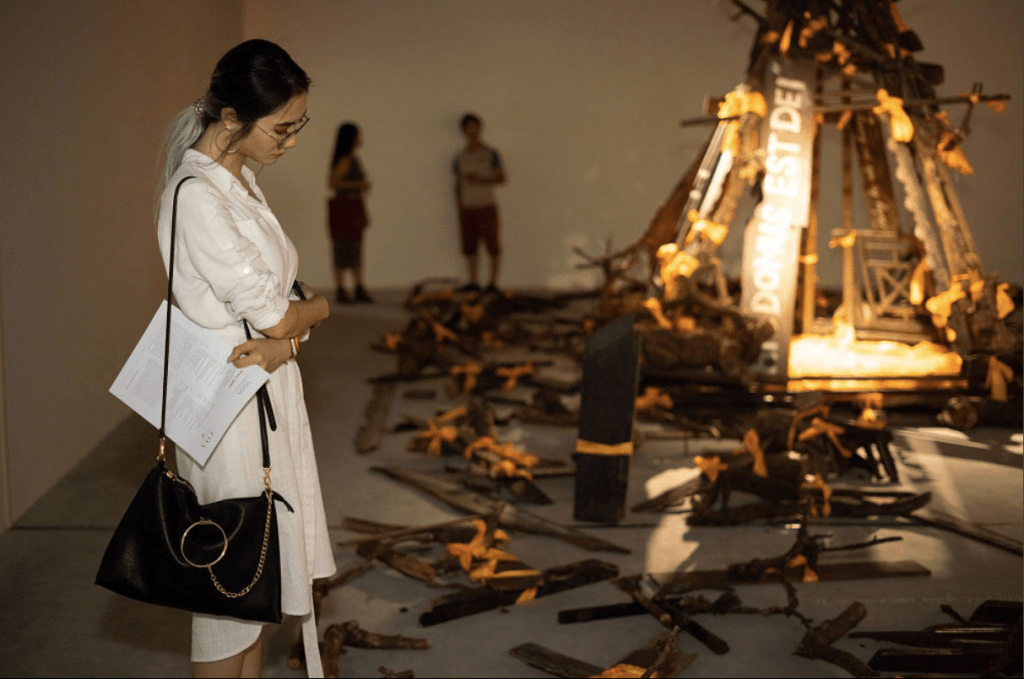
Displayed at VCCA, a contemporary art space located in the basement of the Royal City building in Hanoi, Vietnam, in 2018, this work reproduces “Hic Domus Est Dei No. 1” on a larger scale. Materials were transported from Đà Lạt (the proposed capital of the Indochina Federation from 1949 to 1955) to Hanoi (the capital of the Indochina Federation in 1902). The differences in altitude and climate between these two locations influence the composition and character of each city. This exploration parallels the missionary routes that accompanied the French colonial policy in Indochina.
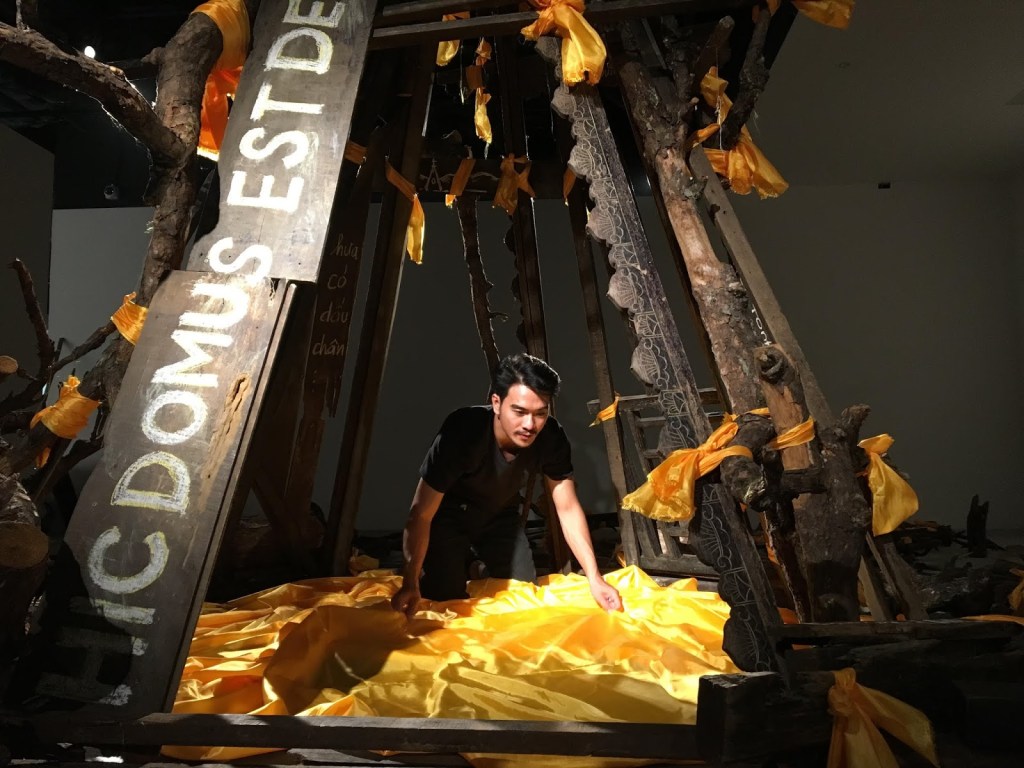
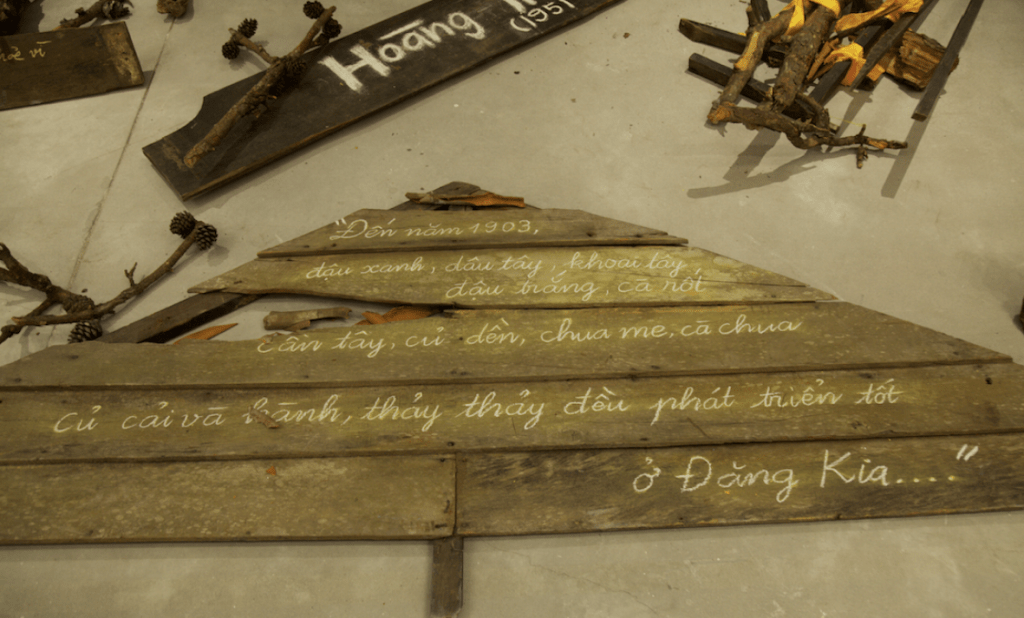
I recreated the bell tower of St. Nicolas Church and the pine forest of Đà Lạt. The materials used include fabric, pinewood, reclaimed wood from old houses, documentary film, natural scents, Hallelujah background music, and texts inscribed on the floors, wood, and walls. The installation evokes the image of a devastated forest, with inscriptions flowing across sculptures, walls, and floors, recalling memories and pivotal events from the late 19th to mid-20th century. The wooden tower is a simulation of the church’s bell tower, inviting visitors to step inside and experience it with a sense of awe. The accompanying sounds and scents deepen the pervasive sense of nostalgia.
Charged with spiritual energy and imbued with a circulating sense of longing, the work rekindles discussions on the theme of generational legacy in Vietnam.
EXHIBITION TEXT
Lê Phi Long’s “Hic Domus Est Dei” translates the soaring tower of the St. Nicholas Cathedral in Đà Lạt into a enigmatic wooden spire. Working from the woodlands of Đà Lạt, the artist collects and marshals wooden beams and tree trunks into a revitalized steeple of the cathedral, built by French missionaries in the 1930s.
A performative transubstantiation of architecture and history unfolds as the apex of a holy tower, along with the haunting history of French evangelism in the Central Highlands, are sorcerized into an eye-level altar made of wood fragments. Naming his installation Hic Domus Est Dei, the grand message at the cathedral’s entrance, meaning “This is the House of God,” Lê Phi Long reshapes and expands the former Eurocentric regimentation of a strictly Christian God, imbuing silent timber with the energy of the divine. The silk that binds the wooden shafts bear the royal shade of Bảo Đại, the emperor and head of the 1950s’ colonial demarcation of the Central Highlands, the so-called French domain of the Crown. As it semi-visibly winds through the tree trunks, the imperial yellow carries the knots of bondage and ghosts of both external and internal empire.
Poetic manifestations of transience are built into the transplantable installation. As the work passes through different sites, the once monotheistic and stable God of European missionaries is now made itinerant, pluralistic and animated in the flesh of timber. In multiple itirations of the installation, the artist inscribes the work’s title on the ground using blackboard chalk. The soft white medium generates letters that self-erase with wind, sunshowers or passers-by, disseminating the Latin inscription in faint traces across the landscapes where the artist erects impermanent interventions. Floating through this shifting web of histories, faiths and terrains is an unnameable scent that migrates with the work from Đà Lạt. Merging with the intangible sounds of Hallelujah, a blur between folk rock and melancholy hymn, the perfume of pine forests carries the sacrality of the ephemeral.
— Nguyễn Hoàng Quyên
SPECIAL THANKS TO:
K.L
Vincom Center for Contemporary Art (VCCA) Team
Curator: Mizuki Endo
Technical Assistants: Bind Lê (Thịnh), Lê Kim Liên, Na Lê
Assistant Researcher : Anne Vo (Ngân)
Cameraman and Photographers: Duc Be and VCCA Team
Film Editor: Đặng Hoàng Nam
Ben House – Thao Dinh Bui // Father Ngọc – Ka Đơn // Church St. Nicholas Cathedral in Đà Lạt



 Phi Long Le