English | Tiếng Việt
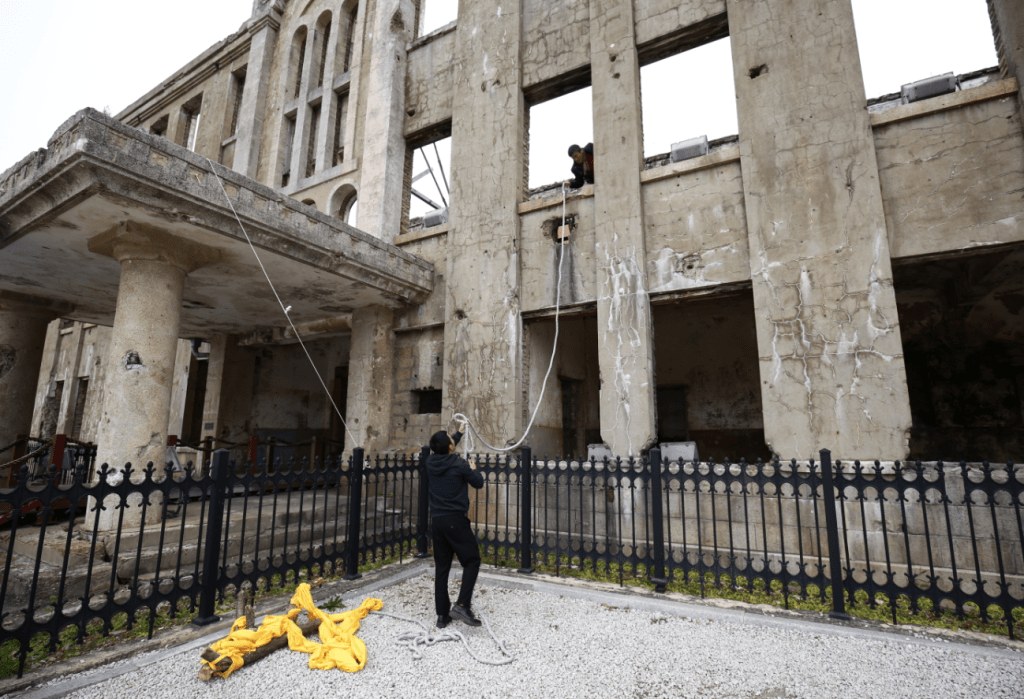
“How to FLY” was created in an abandoned building of Korea’s Labor Party, located in the Demilitarized Zone (DMZ), Cheongju, South Korea. In 1954, following the First Indochina War, Vietnam was divided into two military zones along the 17th parallel. This division lasted until April 30, 1975, when the country was reunified. Similarly, in 1945, after the end of the Second World War, the Korean Peninsula was split into North and South Korea along the 38th parallel.
In 2018, the world witnessed a historic moment when Kim Yo Jong delivered a letter from the North Korean leader, inviting South Korean President Moon Jae In to step north of the 38th parallel. This was followed by a concert broadcast globally, marking a milestone in the warming of inter-Korean relations on the peninsula.
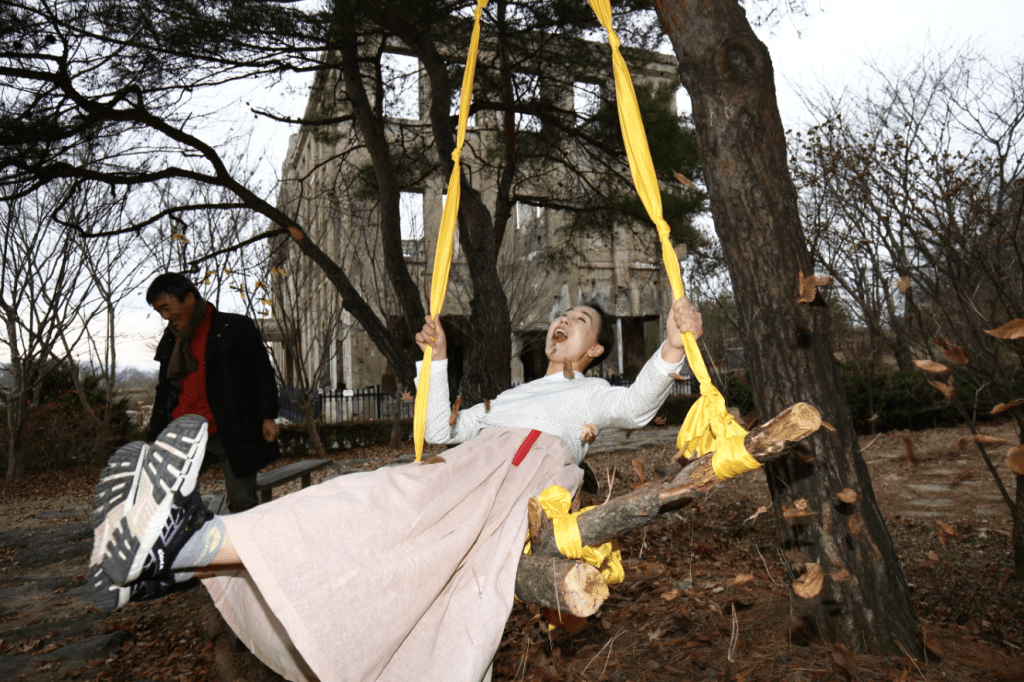
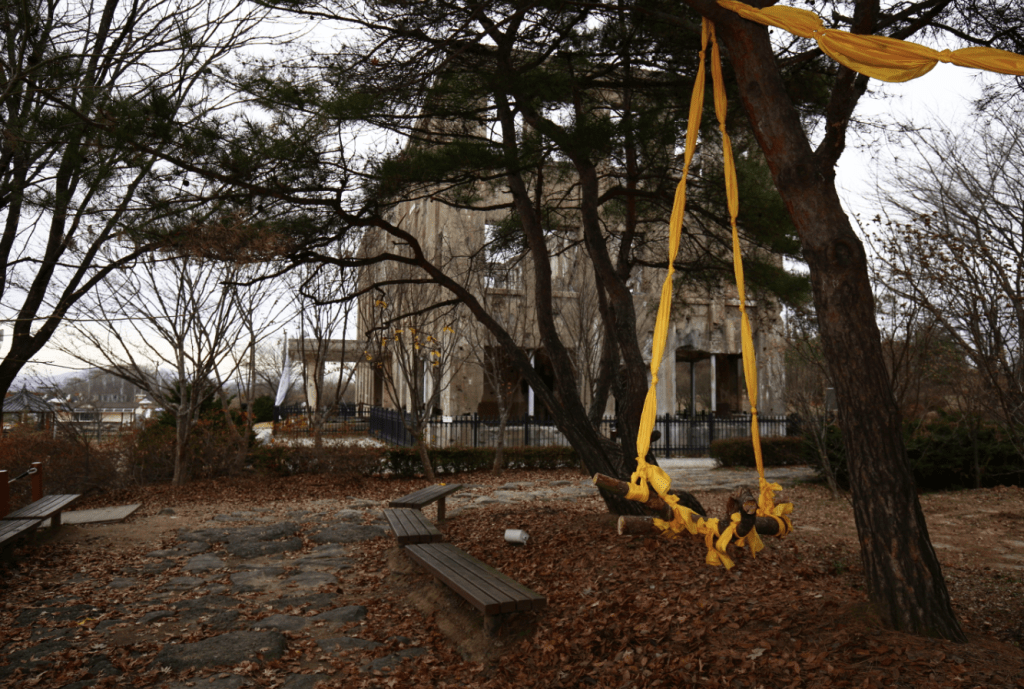
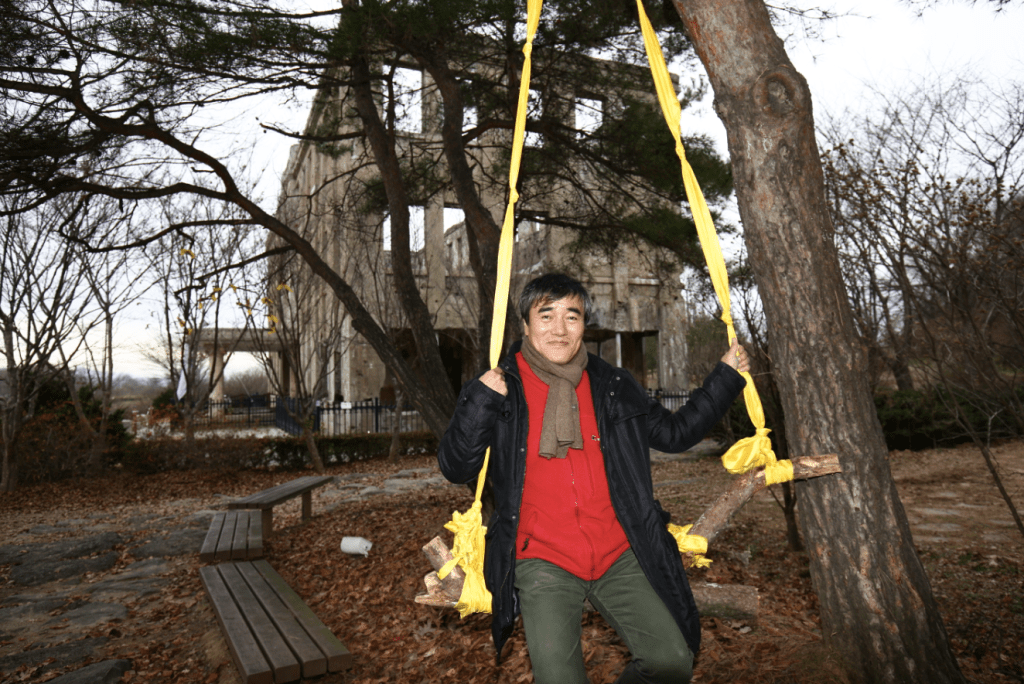
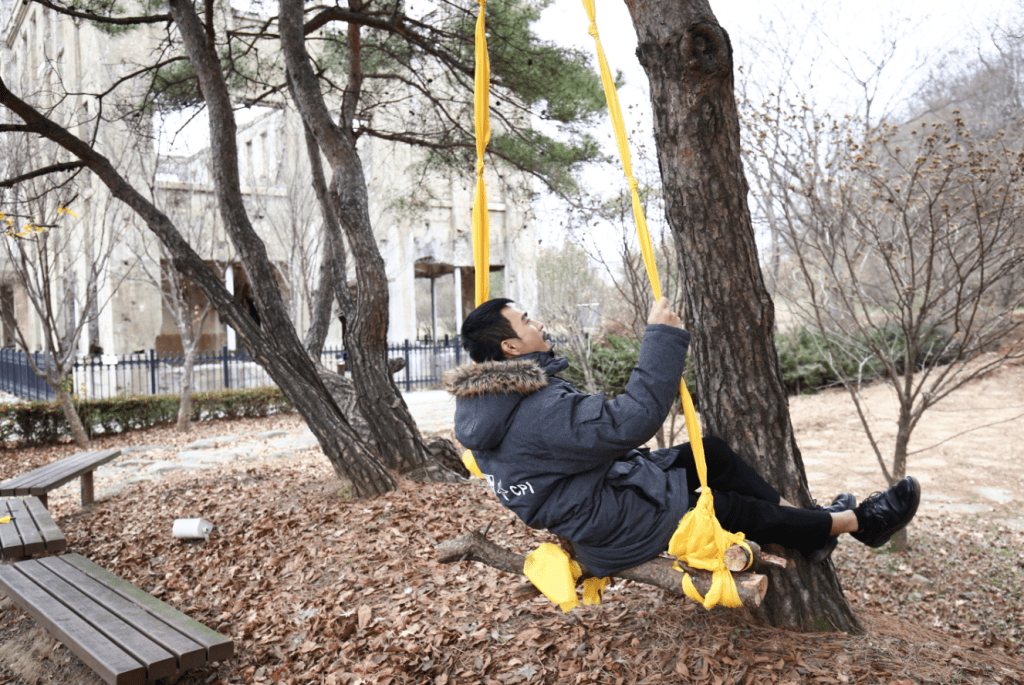
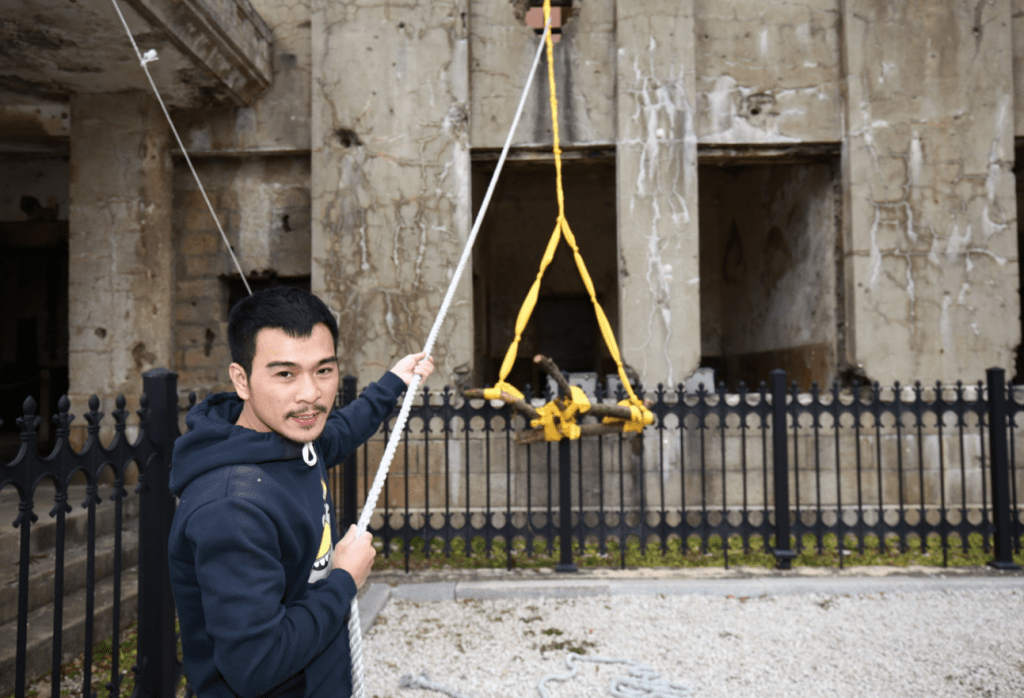
Inspired by the Korean traditional song Arirang, which means “to overcome” and speaks of resilience in the face of difficulties to rebuild society and foster solidarity, I used locally sourced wood to create a swing. This swing was displayed at the Korean Labor Party building, a relic of war and division. Against the backdrop of Korea’s romantic winter, I invited the audience to sit and engage with the artwork.
“How to FLY” reflects on the history of division between the two Koreas while simultaneously recalling the pain inflicted by Korean and Allied troops on the people of central Vietnam in 1965. The work envisions Arirang as a dream of flight, embodying the effort to overcome adversity. While remembering such painful histories can be difficult, the work emphasizes the importance of healing as a foundation for moving toward the future.
This work was supported by the “Asia Highway Project” and the program “Sincerely Sorry, Vietnam.” Performed at Cheorwon-gun Korean Workers’ Party
Headquarters and Korean War Veterans Memorial, in November 2018
SPECIAL THANKS TO:
Asia Highway Project




 Phi Long Le